"Student loan doctor" offers tips to help students and parents manage Georgia tuition increase

The Board of Regents has officially approved a tuition increase for the 2026-2027 academic year, marking what could be the second price hike for many current undergraduates.
Following a recent meeting, officials announced that in-state undergraduates will see a 1% increase, while out-of-state students will face a 3% hike. The board described the move as a "measured approach" to address a $34 million gap in state funding.
Historically, the state covered approximately 75% of instructional costs; however, that figure has now dropped to roughly 57%.
The tuition hike isn't the only change coming to campus. The Board also voted to increase mandatory fees at 13 of Georgia's 25 public colleges and universities. For students already juggling the rising costs of gas, parking, and supplies, the news is a significant blow.
"Everything's now expensive, so tuition increasing will not be good for us," said Alexis Rodriguez, a junior accounting student at Georgia State University.
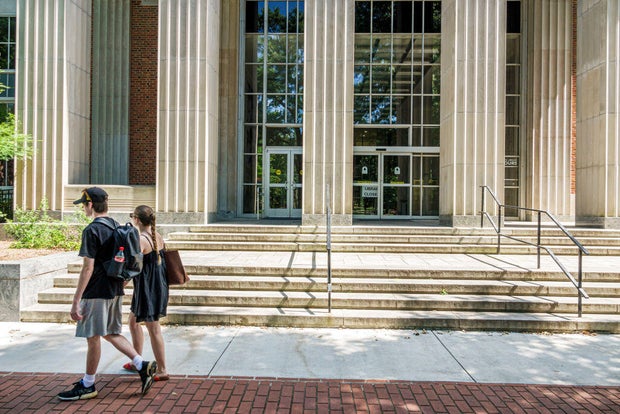
For out-of-state students like GSU sophomore Solei Green, the 3% increase adds to an already heavy financial load.
"It's going to really take a toll on me... I'll probably have to look for more scholarships," Green said.
While most schools face hikes, there is a silver lining for some: students at Kennesaw State and Georgia Southern will actually see a decrease in their mandatory fees.
To help families navigate the new costs, Sonia Lewis, CEO of "The Student Loan Doctor," suggests several strategies:
- Students should tap into 'Micro-Scholarships': Many campuses offer smaller stipends (around $500) specifically for books or supplies that often go unrequested.
- Consider Work-Study Programs. Even working a few hours a month can help bridge the tuition gap and provide a steady stream of smaller funds.
- Utilize Food Stipends. I encourage students to apply for available food assistance programs to free up cash for tuition. Lastly, consider "Parent PLUS" Loans. If a parent applies for a Parent PLUS Loan and is denied, the student may automatically qualify for additional federal aid, up to $4,000 for underclassmen and $5,000 for upperclassmen.
Despite the increases, the Board of Regents maintains that Georgia's public colleges remain the fifth most affordable in the country.