"Caregivers are my heroes" Raise the Future's Cathy Howe makes cheerleading caregivers into an art form
As a Family Navigator for Raise the Future, Cathy Howe spends a lot of time on house calls. Much of her business is done around the dining room table.
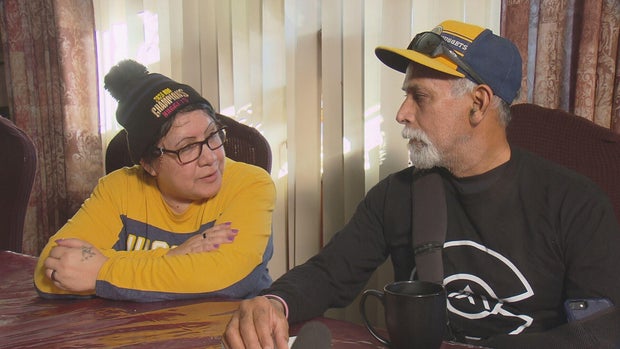
"She's great...she's just great," said Annette, one of Howe's clients.
"Yea, words can't say everything that she's done," added Annette's husband, Rod.
Annette and Rod are on their third round of parenting. They're raising their great nephew, Salvador, whom they think of as a grandson. They've been working with Howe for 3 years.
"How did you learn to make a safe space for him so he feels like this is his place? You are his people?" Howe asked the couple on a recent visit.
"The classes, the education on things we never... we never. We came from a generation of, 'Do as you're told,'" Rod replied.
"I'm of a generation same as your. You did what your Daddy said," Howe encouraged. "And I appreciate both of you because a lot of people aren't willing to be self-reflective and to learn new skills,"
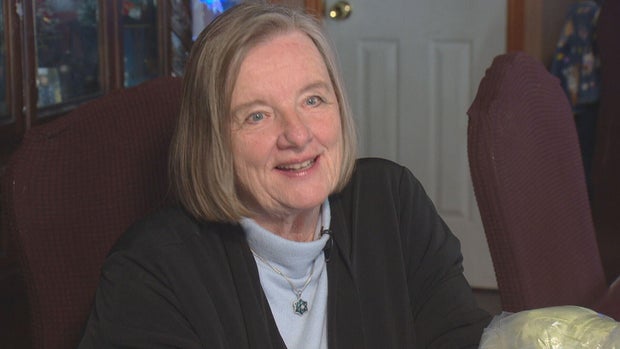
Howe has been a family navigator for 8-years, and a foster parent for 50. It all started a little by accident when Howe was newly married and living in New Mexico.
"I was a probation officer and a little boy had been burned in three places with a steam iron. He was 2, and there was no official person, other than myself, to keep him from being released to his parents. Through that process of walking through that with him and his family, we became foster parents," Howe recalled.
That little boy and his brothers are about 56 to 60 years old now. Howe has fostered 29 children since then.
"After that first little guy, and then another little guy, and another little guy, I thought, 'I can do this.' It's been a learning journey through the entire time," she explained.
Howe had four biological children. She's also caring for two kinship placements and now has 12 grandchildren. She also spent 27-years working as a pastor after her career as a probation officer.
"It gives me a faith perspective that I believe there will be justice. I believe that there is love for all. I believe there'll be justice for those who've been traumatized by thing they did not deserve," she explained.
Howe described her time working with children living in the foster care system, as a time of spreading seeds. She said that she likely will never see the seeds grow to fruition, but that she trusts that one day they'll flourish.
"These children...they're all unique. There are similarities. There's trauma. There's always trauma present, but there's also, among many of them a resiliency to succeed, a desire to succeed if given the right structure and supports," she said.
"How does it make you feel to know that you were able to provide that for so many children over the years?" asked CBS News Colorado's Mekialaya White.
"You know, Mekialaya, it's an odd thing. I feel like I've gotten more than I've given," Howe replied.
Yet, she keeps on giving, sometimes showing up with a healing gift. She brought Annette & Rod's grandson a weighted stuffed animal, which could help the 8-year-old regulate his emotions.
"Tons of wisdom, tons of resources," Rod enumerated.
"Tons of experience," Annette interjected.
"Yea, she thinks of things for us before we even realize that we need those things," Rod finished.
In her time with Raise the Future, Howe has become an expert in trust based relational intervention, TBRI, which is a therapeutic model designed to help children navigate trauma.
"TBRI came along just as we got Alex (a kinship placement), and it helped me understand more the trauma he'd been through. That the tools and tricks that I has learned with my other children were not effective, and to see him more clearly for who he was and appreciate who he is," Howe remembered. "TBRI gave me a whole different tool kit to look at what he had walked through, who he is, how to respond more proactively, and reactively and not to be so defensive."
Now she teaches caregivers like Annette and Rod how to use TBRI in their own homes.
"I think what's really helped me is trying to understand why he's in fight or flight," Annette said.
"Not necessarily telling them, 'No,' but giving them choices to have them come up within their own mind a better solution," Rod added.
"With all of your experience over the years, how do you go into these homes? What's the approach you use?" White asked.
"The caregivers are my heroes," Howe said. "I get to cheerlead caregivers. If you haven't been in that situation, you don't know what it's like, and it's so easy for other people to come in and judge you and criticize you. But to say, 'You are amazing. This is what I see. This is where you shine.' and help build the caregivers."
Howe said she uses a 70/30 rule, where she wants her clients to talk and share 70-percent of the time, while she speaks only 30-percent. She gives each person the time and the space to be human.
"Knowing that we have to give ourself grace because we don't get it right 100-percent of the time," Annette said.
"When you seem like your world is spiraling out of control, just to have someone there that's solid in your corner to say it's going to be okay," Rod said.
"I see everybody as a gift. Everybody to me has a bow on their head. Some of them are harder to unwrap, but everybody is a gift," Howe said.
In addition to her one-on-one coaching with her families, Howe connects them to resources and a whole village of people who are going through the same thing, connects that are precious for those who need a little help.
LINK: Wednesday's Child on CBS Colorado
You can find out more about the Family Services Program by calling Raise the Future at (303) 755-4756 or (800) 451-5246 or go to the .