91³Ô¹ÏÍø

Watch CBS News

3 easy ways to grow your savings
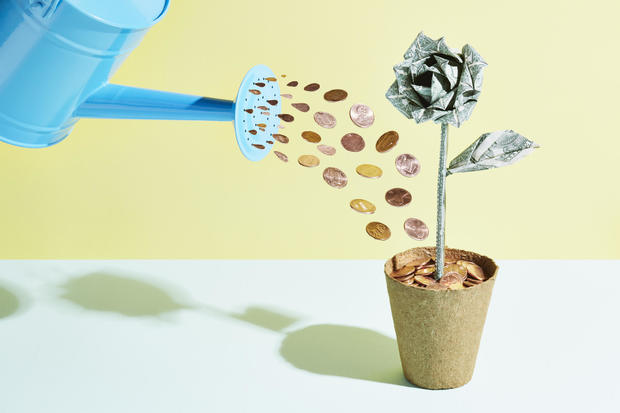
3-easy-ways-to-grow-your-savings.jpg
When it comes to savings, every little bit helps.  /Getty Images

Savings are essential to your financial success. They can help you reach your goals, fund major expenses and give you something to fall back on in the event of job loss or other setbacks.

Yet the average American only has around $5,000 in savings. One medical emergency or home repair could easily wipe that out. Plus, experts recommend having at least three to six months' expenses in your emergency fund to cover daily living costs if you lose your job.

If you don't have any savings, the sooner you start, the better. It's simple, and you don't need a ton of money — every little bit helps. If you've already built up some savings, it's important to keep adding to it to ensure you have enough. In this article, we'll explore some easy ways to do this.

If you're ready to save more and earn more interest then .

3 easy ways to grow your savings

There are plenty of easy ways to grow your savings. Here are three to pursue now.

A high-yield savings account

A savings account is a financial product everyone should have. It's an easy place to build an emergency fund and set money aside for a short-term savings goal such as a vacation, wedding or new car. You can access the funds in your account anytime without incurring fees (as long as you keep in mind any minimum monthly withdrawal limit).

Regular savings accounts are an option, but under most circumstances, a high-yield savings account is far and away the better choice. As their name implies, these accounts offer a higher interest rate than regular savings accounts — often significantly higher.

The average interest rate for regular savings accounts is currently around 0.23%. Contrast that with high-interest savings account rates, which are around 3.5% to 4.5% (or higher). Savings rates fluctuate based on the federal funds rate, but high-yield account rates are reliably better than regular account rates. So, unless in-person customer service is essential to you (many high-yield accounts are offered by online banks), going with a high-yield account is a no-brainer.

To open a high-yield savings account, shop around and compare lenders. You can to get started.

A certificate of deposit (CD)

Like a high-yield savings account, a certificate of deposit also offers interest rates of around 3.5% to 4.5%. Unlike a high-yield savings account, a CD locks you into a specific term (typically between three months and five years). If you need to withdraw funds before the term ends, you'll incur fees.

Your interest rate is set when you open a CD, so you won't earn more interest if the federal funds rate goes up. That said, a CD can be a good way to ensure you aren't tempted to dip into your savings for unnecessary expenses.

to see how much you could be earning.

Automated investing with Acorns

If you have trouble remembering to contribute to your savings — or you just want one less to-do on your list — Acorns is a great set-it-and-forget-it option. Acorns enables you to invest your spare change with its "Round-Ups" feature.

Simply link your bank account to Acorns or use the Acorns Debit Card, and any purchase you make is rounded up to the next dollar, with the difference invested in your Acorns account. You can also earn bonus investments by shopping with Acorns' partner brands.

Because Round-Ups investments are small, they're an easy way to build your savings if you don't have a ton of money to spare (or if you'd like to supplement your other savings contributions).

.

The bottom line

You can choose one or all of the above options to build and grow your savings. The key thing is just getting started. No matter how much you can afford to put aside right now, your future self will thank you for doing it.

To grow your savings account balance, .

View CBS News In
CBS News App Open
Chrome Safari Continue
const link = doc.createElement('link'); link.rel = 'stylesheet'; link.href = '/fly/fly/bundles/cbsnewscontent/css/cmp-banner.min.css?v=50747257b890e014813016b79ece0fb2'; doc.head.appendChild(link); doc.body.innerHTML = CONSENT_MESSAGE; } else { el.insertAdjacentHTML('afterend', CONSENT_MESSAGE); } }); } function hidePrivacyMessage() { // Remove from the main document document.querySelectorAll(`.${CONSENT_MESSAGE_CLASS}`).forEach(el => el.remove()); // Remove from inside any iframes document.querySelectorAll('iframe').forEach(iframe => { const doc = iframe.contentDocument || iframe.contentWindow.document; doc.querySelectorAll(`.${CONSENT_MESSAGE_CLASS}`).forEach(el => el.remove()); }); } function activateGatedScripts() { // Handle both new format (cmp-gated-script) and old OneTrust/Ketch format (optanon-category-4) const gatedScripts = Array.from(document.querySelectorAll('script.cmp-gated-script, script.optanon-category-4')); // Activate scripts sequentially with a small delay to avoid timing issues let delay = 0; gatedScripts.forEach(function(placeholder, index) { setTimeout(function() { // Skip if already processed if (placeholder.hasAttribute('data-cmp-processed')) { return; } placeholder.setAttribute('data-cmp-processed', 'true'); const newScript = document.createElement('script'); newScript.type = 'text/javascript'; // Try new format first (data-cmp-src), then fall back to old format (data-src) const src = placeholder.getAttribute('data-cmp-src') || placeholder.getAttribute('data-src'); if (src) { newScript.src = src; } else if (placeholder.textContent) { // Inline script - just copy the content newScript.textContent = placeholder.textContent; } // Handle new format attributes (data-cmp-attrs) - for both inline and external scripts const attrs = placeholder.getAttribute('data-cmp-attrs'); if (attrs) { const tempDiv = document.createElement('div'); tempDiv.innerHTML = '
<\/div>'; const tempAttrs = tempDiv.firstChild.attributes; for (let i = 0; i < tempAttrs.length; i++) { // For external scripts, allow defer/async. For inline scripts, skip them (not valid) if (src || (tempAttrs[i].name !== 'async' && tempAttrs[i].name !== 'defer')) { newScript.setAttribute(tempAttrs[i].name, tempAttrs[i].value); } } } // Copy other attributes from old OneTrust format for (let i = 0; i < placeholder.attributes.length; i++) { const attr = placeholder.attributes[i]; // Skip attributes we've already handled or don't want to copy if (!['class', 'data-src', 'data-type', 'data-cmp-src', 'data-cmp-attrs', 'data-cmp-processed', 'type', 'async', 'defer', 'src'].includes(attr.name)) { newScript.setAttribute(attr.name, attr.value); } } placeholder.parentNode.replaceChild(newScript, placeholder); // If external script, manually trigger window.onload handlers after it loads // This handles widgets that use window.onload for initialization if (src) { newScript.addEventListener('load', function() { // If page already loaded and script set a new onload handler, trigger it if (document.readyState === 'complete' && window.onload) { const originalOnload = window.onload; window.onload = null; // Clear temporarily to prevent loops originalOnload(); // Execute the handler } }); } }, delay); delay += 500; // 500ms delay between each script to allow full loading }); } cbsoptanon.onScriptsReady(function(cmp) { cmp.ot.targetingAllowed(function(allowed) { if (!allowed) { showPrivacyMessage(); } else { activateGatedScripts(); } }); cmp.ot.awaitInitialConsent(function(consent_model) { cmp.ot.addOnConsentChangedHandler(function() { cmp.ot.targetingAllowed(function(allowed) { if (allowed) { hidePrivacyMessage(); activateGatedScripts(); } else { showPrivacyMessage(); } }); }); }); });