91³Ô¹ÏÍø

Watch CBS News

3 ways to use a high-yield savings account
3-ways-to-use-a-high-yield-savings-account.jpg
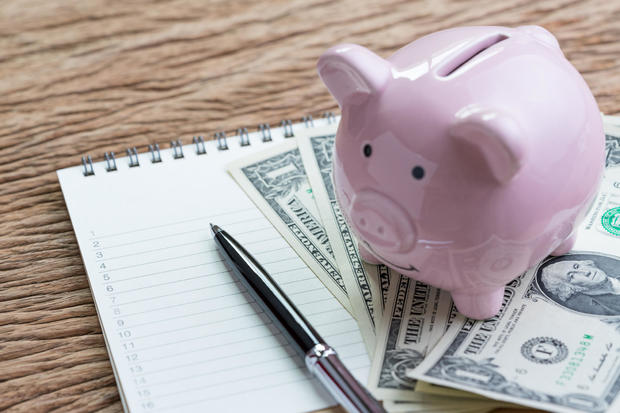
High-yield savings accounts are ideal for a number of purposes. Getty Images/iStockphoto

Savings are essential to your financial success. They provide a safety net when the unexpected happens and help you allocate money to multiple goals. If your monthly budget doesn't include a line for savings contributions, it should.

When it comes to where to put those savings, a high-yield savings account is a great choice. In all savings accounts, your money earns compound interest, allowing your balance to grow without any action on your part. Your funds are easily accessible, unlike CDs that penalize you from withdrawing funds before a certain date. And your money is FDIC-insured up to $250,000 per account per bank.

But with a high-yield savings account, you earn considerably more interest than with a regular savings account. The average interest rate for regular savings accounts is currently about 0.37%. By contrast, high-yield savings accounts offer average rates in the 3.5% to 4.5% range (if not higher). That can make a big difference over time.

High-yield savings accounts are ideal for several purposes. In this article, we'll explore some of the best uses for this type of account.

 to see how much you could be earning with a high-yield savings account.

3 ways to use a high-yield savings account

You can use a high-yield savings account for whatever you want. It's your money, and there are no restrictions on how you spend it. But to get the most out of your account consider using it one of these three ways.

1. For an emergency fund

Because they're so liquid, high-yield savings accounts are great for building an emergency fund you might need to access at any time. An emergency fund can cover you in any kind of unexpected situation, from job loss to major home repairs to big medical bills. Experts recommend saving up at least three to six months' worth of living expenses, but any amount you can put away is a good start.

.

2. For short-term savings goals

Short-term savings goals are expenses you plan to pay for in the next few years, such as a vacation, new appliance or holiday gifts. A high-yield savings account gives you somewhere to save funds earmarked for these goals — without the temptation to tap into them (like you might feel with a checking account). You can even have multiple accounts for multiple goals to make it easier to track your progress.

3. For major purchases

For large expenses like a new car, a wedding or a down payment on a house, a high-yield savings account can help you reach your goal faster.

For example, say you deposit $1,000 into a regular savings account at 0.37% APY. After one year you'll have made $3.70. But deposit that amount into a high-yield savings account at 3.5%, and you'll have made $35. The more you contribute and the longer you save, the faster interest adds up.

Plus, paying for big expenses in cash keeps you from relying on financing like credit cards, which can cost you extra for years to come due to interest charges.

.

The bottom line

A high-yield savings account is an important part of any financial plan. When choosing an account, be sure to shop around, compare rates and consider any account features (such as ATM access) and fees (such as maintenance and minimum balances fees). Do your homework, and you can find the best high-yield account for you and your goals.
View CBS News In
CBS News App Open
Chrome Safari Continue
const link = doc.createElement('link'); link.rel = 'stylesheet'; link.href = '/fly/fly/bundles/cbsnewscontent/css/cmp-banner.min.css?v=50747257b890e014813016b79ece0fb2'; doc.head.appendChild(link); doc.body.innerHTML = CONSENT_MESSAGE; } else { el.insertAdjacentHTML('afterend', CONSENT_MESSAGE); } }); } function hidePrivacyMessage() { // Remove from the main document document.querySelectorAll(`.${CONSENT_MESSAGE_CLASS}`).forEach(el => el.remove()); // Remove from inside any iframes document.querySelectorAll('iframe').forEach(iframe => { const doc = iframe.contentDocument || iframe.contentWindow.document; doc.querySelectorAll(`.${CONSENT_MESSAGE_CLASS}`).forEach(el => el.remove()); }); } function activateGatedScripts() { // Handle both new format (cmp-gated-script) and old OneTrust/Ketch format (optanon-category-4) const gatedScripts = Array.from(document.querySelectorAll('script.cmp-gated-script, script.optanon-category-4')); // Activate scripts sequentially with a small delay to avoid timing issues let delay = 0; gatedScripts.forEach(function(placeholder, index) { setTimeout(function() { // Skip if already processed if (placeholder.hasAttribute('data-cmp-processed')) { return; } placeholder.setAttribute('data-cmp-processed', 'true'); const newScript = document.createElement('script'); newScript.type = 'text/javascript'; // Try new format first (data-cmp-src), then fall back to old format (data-src) const src = placeholder.getAttribute('data-cmp-src') || placeholder.getAttribute('data-src'); if (src) { newScript.src = src; } else if (placeholder.textContent) { // Inline script - just copy the content newScript.textContent = placeholder.textContent; } // Handle new format attributes (data-cmp-attrs) - for both inline and external scripts const attrs = placeholder.getAttribute('data-cmp-attrs'); if (attrs) { const tempDiv = document.createElement('div'); tempDiv.innerHTML = '
<\/div>'; const tempAttrs = tempDiv.firstChild.attributes; for (let i = 0; i < tempAttrs.length; i++) { // For external scripts, allow defer/async. For inline scripts, skip them (not valid) if (src || (tempAttrs[i].name !== 'async' && tempAttrs[i].name !== 'defer')) { newScript.setAttribute(tempAttrs[i].name, tempAttrs[i].value); } } } // Copy other attributes from old OneTrust format for (let i = 0; i < placeholder.attributes.length; i++) { const attr = placeholder.attributes[i]; // Skip attributes we've already handled or don't want to copy if (!['class', 'data-src', 'data-type', 'data-cmp-src', 'data-cmp-attrs', 'data-cmp-processed', 'type', 'async', 'defer', 'src'].includes(attr.name)) { newScript.setAttribute(attr.name, attr.value); } } placeholder.parentNode.replaceChild(newScript, placeholder); // If external script, manually trigger window.onload handlers after it loads // This handles widgets that use window.onload for initialization if (src) { newScript.addEventListener('load', function() { // If page already loaded and script set a new onload handler, trigger it if (document.readyState === 'complete' && window.onload) { const originalOnload = window.onload; window.onload = null; // Clear temporarily to prevent loops originalOnload(); // Execute the handler } }); } }, delay); delay += 500; // 500ms delay between each script to allow full loading }); } cbsoptanon.onScriptsReady(function(cmp) { cmp.ot.targetingAllowed(function(allowed) { if (!allowed) { showPrivacyMessage(); } else { activateGatedScripts(); } }); cmp.ot.awaitInitialConsent(function(consent_model) { cmp.ot.addOnConsentChangedHandler(function() { cmp.ot.targetingAllowed(function(allowed) { if (allowed) { hidePrivacyMessage(); activateGatedScripts(); } else { showPrivacyMessage(); } }); }); }); });