91³Ô¹ÏÍø

Watch CBS News

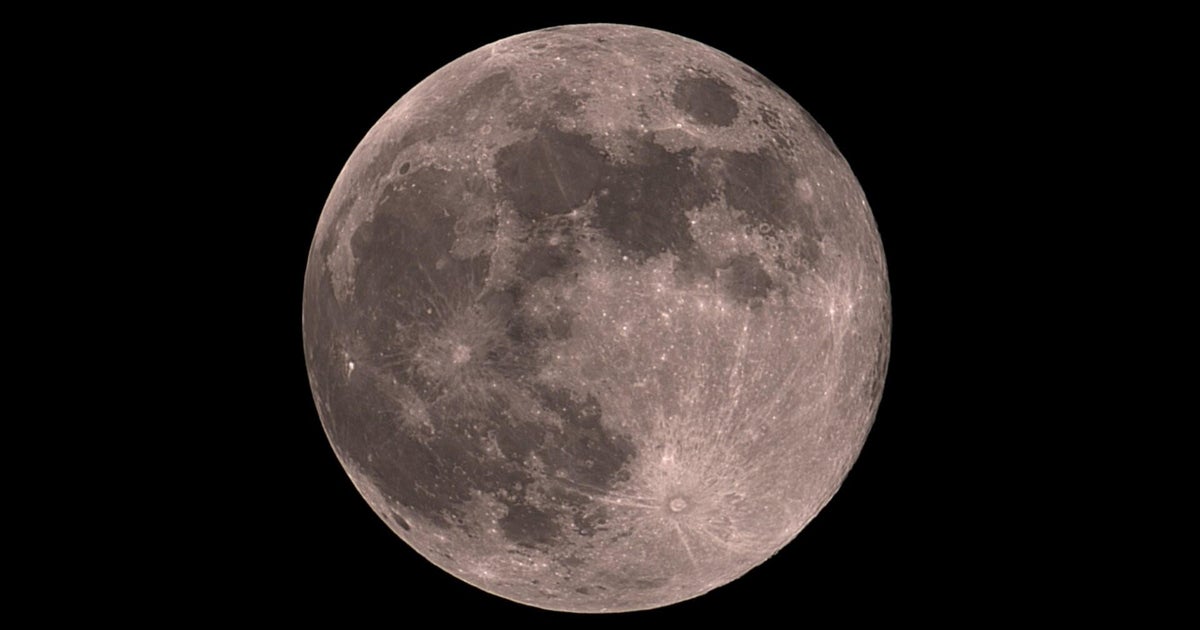
Earth will get a second "mini-moon" for 2 months this year

Earth will get a second moon for about two months this year when a small asteroid begins to orbit our planet. The asteroid was discovered in August and is set to become a mini-moon, revolving around Earth in a horseshoe shape from Sept. 29 to Nov. 25.

Researchers at the Asteroid Terrestrial-impact Last Alert System, an asteroid monitoring system funded by NASA, spotted the asteroid using an instrument in Sutherland, South Africa and labeled it 2024 PT5. 

Scientists from the Universidad Complutense de Madrid have tracked the asteroid's orbit for 21 days and determined its future path. 2024 PT5 is from the Arjuna asteroid belt, which orbits the sun, according to their study . 

But Earth's gravitational pull will draw 2024 PT5 towards it and, much like our moon, it will orbit our planet — but only for 56.6 days.

While other non-Earth objects, or NEOs, have entered Earth's orbit before, some don't complete full revolutions of Earth. Some, however, do and become so-called mini-moons.

An asteroid called 2020 CD3 was bound to Earth for several years before leaving the planet's orbit in 2020 and another called 2022 NX1 became a mini-moon of Earth in 1981 and 2022 and will return again in 2051. 

2024 PT5, which is larger than some of the other mini-moons, will also return to Earth's orbit — in 2055. 

Earth's gravity will pull it into its orbit and the asteroid will have negative geocentric energy, meaning it can't escape Earth's gravitational pull. It will orbit around Earth in a horseshoe shape before reverting back to heliocentric energy, meaning it will rotate around the sun again, like the other planets and NEOs in our galaxy.

Even after it leaves orbit, it will stay near Earth for a few months, making its closest approach on Jan. 9, 2025. Soon after, it will leave Earth's neighborhood until its path puts it back into our orbit in about 30 years.

The study's lead author Carlos de la Fuente Marcos told the mini-moon will be too small to see with amateur telescopes or binoculars but professional astronomers with stronger tools will be able to spot it.

CBS News has reached out to Marcos for further information and is awaiting response.
View CBS News In
CBS News App Open
Chrome Safari Continue
const link = doc.createElement('link'); link.rel = 'stylesheet'; link.href = '/fly/fly/bundles/cbsnewscontent/css/cmp-banner.min.css?v=296763317a51cab90faa73f1bb146d5c'; doc.head.appendChild(link); doc.body.innerHTML = CONSENT_MESSAGE; } else { el.insertAdjacentHTML('afterend', CONSENT_MESSAGE); } }); } function hidePrivacyMessage() { // Remove from the main document document.querySelectorAll(`.${CONSENT_MESSAGE_CLASS}`).forEach(el => el.remove()); // Remove from inside any iframes document.querySelectorAll('iframe').forEach(iframe => { const doc = iframe.contentDocument || iframe.contentWindow.document; doc.querySelectorAll(`.${CONSENT_MESSAGE_CLASS}`).forEach(el => el.remove()); }); } function activateGatedScripts() { // Handle both new format (cmp-gated-script) and old OneTrust/Ketch format (optanon-category-4) const gatedScripts = Array.from(document.querySelectorAll('script.cmp-gated-script, script.optanon-category-4')); // Activate scripts sequentially with a small delay to avoid timing issues let delay = 0; gatedScripts.forEach(function(placeholder, index) { setTimeout(function() { // Skip if already processed if (placeholder.hasAttribute('data-cmp-processed')) { return; } placeholder.setAttribute('data-cmp-processed', 'true'); const newScript = document.createElement('script'); newScript.type = 'text/javascript'; // Try new format first (data-cmp-src), then fall back to old format (data-src) const src = placeholder.getAttribute('data-cmp-src') || placeholder.getAttribute('data-src'); if (src) { newScript.src = src; } else if (placeholder.textContent) { // Inline script - just copy the content newScript.textContent = placeholder.textContent; } // Handle new format attributes (data-cmp-attrs) - for both inline and external scripts const attrs = placeholder.getAttribute('data-cmp-attrs'); if (attrs) { const tempDiv = document.createElement('div'); tempDiv.innerHTML = '
<\/div>'; const tempAttrs = tempDiv.firstChild.attributes; for (let i = 0; i < tempAttrs.length; i++) { // For external scripts, allow defer/async. For inline scripts, skip them (not valid) if (src || (tempAttrs[i].name !== 'async' && tempAttrs[i].name !== 'defer')) { newScript.setAttribute(tempAttrs[i].name, tempAttrs[i].value); } } } // Copy other attributes from old OneTrust format for (let i = 0; i < placeholder.attributes.length; i++) { const attr = placeholder.attributes[i]; // Skip attributes we've already handled or don't want to copy if (!['class', 'data-src', 'data-type', 'data-cmp-src', 'data-cmp-attrs', 'data-cmp-processed', 'type', 'async', 'defer', 'src'].includes(attr.name)) { newScript.setAttribute(attr.name, attr.value); } } placeholder.parentNode.replaceChild(newScript, placeholder); // If external script, manually trigger window.onload handlers after it loads // This handles widgets that use window.onload for initialization if (src) { newScript.addEventListener('load', function() { // If page already loaded and script set a new onload handler, trigger it if (document.readyState === 'complete' && window.onload) { const originalOnload = window.onload; window.onload = null; // Clear temporarily to prevent loops originalOnload(); // Execute the handler } }); } }, delay); delay += 500; // 500ms delay between each script to allow full loading }); } cbsoptanon.onScriptsReady(function(cmp) { cmp.ot.targetingAllowed(function(allowed) { if (!allowed) { showPrivacyMessage(); } else { activateGatedScripts(); } }); cmp.ot.awaitInitialConsent(function(consent_model) { cmp.ot.addOnConsentChangedHandler(function() { cmp.ot.targetingAllowed(function(allowed) { if (allowed) { hidePrivacyMessage(); activateGatedScripts(); } else { showPrivacyMessage(); } }); }); }); });