Will gas dip below $3 a gallon this year? Here's what experts predict.
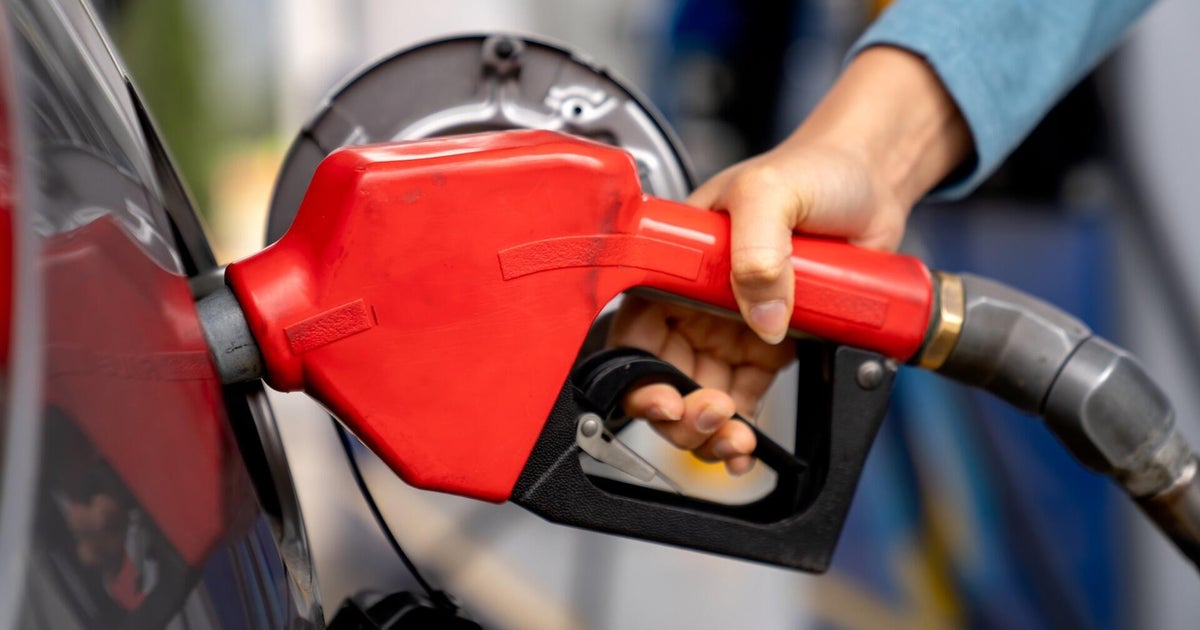
Drivers around the U.S. have seen some modest relief at the pump lately as gasoline prices retreat toward $4 a gallon. But motorists shouldn't bank on fuel costs returning to where they were just before the Iran war anytime soon, according to experts.
Mark Zandi, chief economist at Moody's Analytics, doesn't expect gas prices to drop below $3 this year absent a major economic shock, such as a recession.
"Under the most optimistic scenarios, I would expect gas prices to settle closer to $3.50 by year's end," he told CBS News in an email.
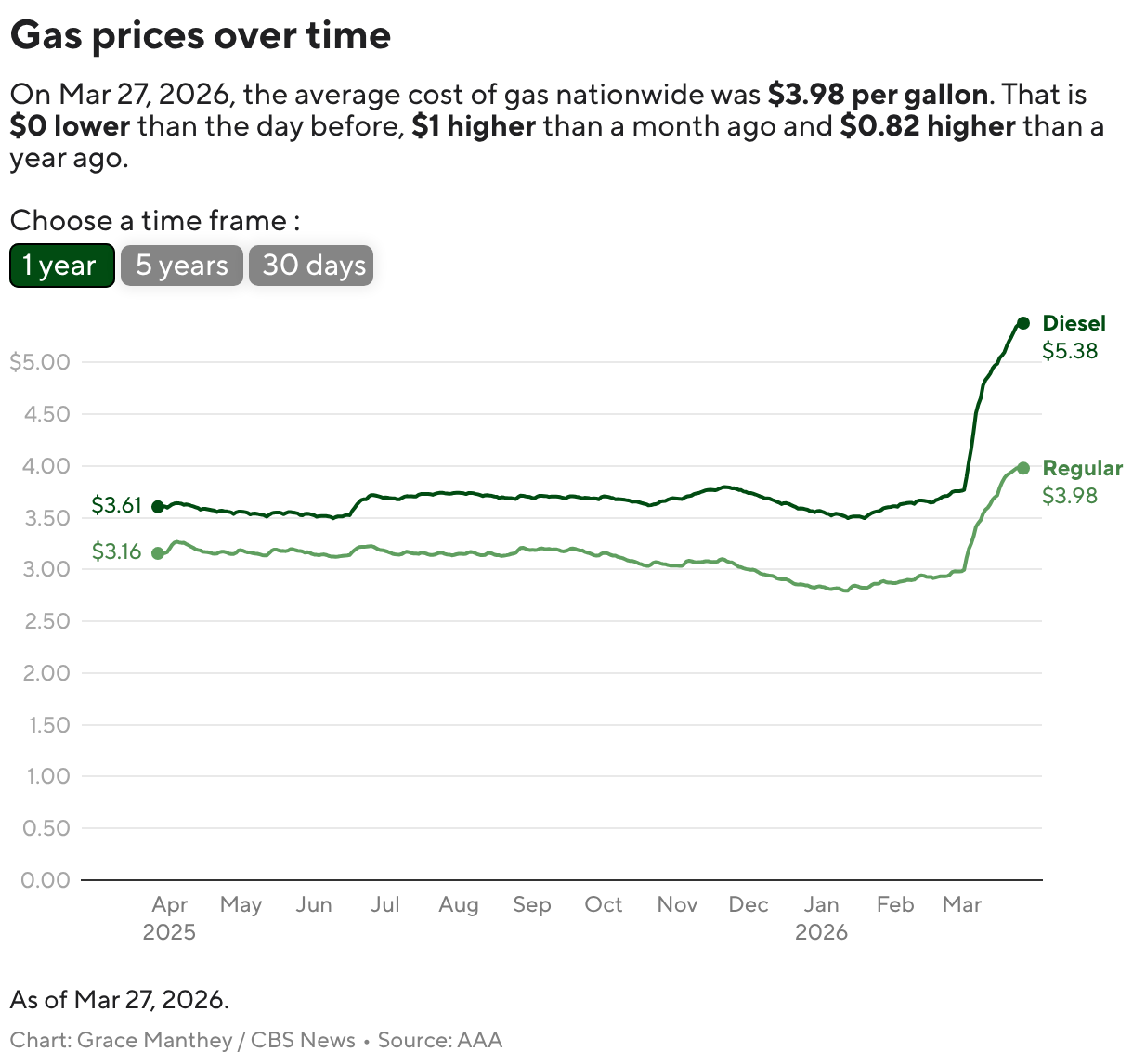
When the U.S. and Israel launched military strikes on Iran on Feb. 28, the national average price of gas was $2.98 a gallon. But the conflict has crippled oil shipments passing through the strategically vital Strait of Hormuz, pushing gas prices to a recent high of $4.17 a gallon on April 9.
Expect higher fuel prices for months
Fuel costs are closely tied to oil prices, which have been elevated since the Iran war started. And unfortunately for motorists, gas prices typically rise much faster after crude spikes than they recede when oil drops — a pattern known by economists as the "rockets and feathers" principle,
Zandi estimates it will take months, if not years, for the global oil supply to rebound due to the damage inflicted by the war on oil infrastructure across the Middle East. It's also unclear when the Strait of Hormuz will fully reopen.
As a result, diminished global oil supply is likely to keep U.S. fuel prices elevated for months to come, Zandi said. Oil prices are unlikely to return to pre-war levels even when the conflict ends, given the heightened risk of transporting oil through the strait, he predicted.
As of Tuesday, the average U.S. gas price was $4.02, to AAA, up more than a dollar since the conflict started.
"If the strait were to reopen by tomorrow — maybe late October, November, December — the national average could make a run at falling below $3 a gallon," Patrick De Haan, a petroleum expert at GasBuddy, told CBS News on Monday. "But that is certainly not a guarantee."
Asked when he thinks gas will retreat below $3 a gallon during a CNN interview on Sunday, Energy Secretary Chris Wright said, "That could happen later this year. That might not happen 'til next year."
President Trump, however, appeared to contradict Wright, telling The on Monday his energy secretary was "wrong" on that timeline. For his part, Mr. Trump said that gas prices will drop, "as soon as this ends," referring to the Iran war.
Why gas prices could rise
De Haan said there's also a risk that gas prices could go back up, given the continuing volatility of oil prices.
Oil prices fell by around 10% on Friday after Iran said the Strait of Hormuz was "completely open," but quickly rose after tensions with the U.S. flared up over the weekend.
Wright told CNN that gas prices have already peaked and will continue to drop.
De Haan said gas prices could jump if Mr. Trump moves forward with threats to attack Iran's civilian infrastructure. The president on Sunday the U.S. would "knock out every single Power Plant, and every single Bridge" if Iran does not agree to a peace deal.
"I don't think the saga between the U.S. and Iran is going to end anytime soon," De Haan said. "So to say that prices have peaked, I mean, I'd like to agree, but I think that might still be wishful thinking."
De Haan also expects gas prices to fluctuate during hurricane season, which stretches from June through November.
Gregory Brew, an energy analyst with political risk consulting firm Eurasia Group, also believes we haven't seen the last of price hikes. Gas prices will "likely rise as demand rises moving into the summer," he said in a research note on Monday.
Who gets hit hardest
Research from Goldman Sachs shows that higher gas prices disproportionately weigh on the bottom 20% of U.S. income earners. Compared with the top 20%, poorer households spend roughly four times as much of their after-tax income on gas, analysts from the investment bank found.
Other research shows that higher gas prices could also largely wipe out the fatter tax refunds Americans are receiving this year as a result of the "one big, beautiful bill," the Republican tax cut and spending law passed last year.
Economists from the Stanford Institute for Economic Policy Research estimate that the average U.S. household will spend an additional $740 on gas this year due to higher oil prices from the Iran war.
By comparison, the average tax refund this year is $3,397, up 11%, or around $350, from 2025, according to IRS .