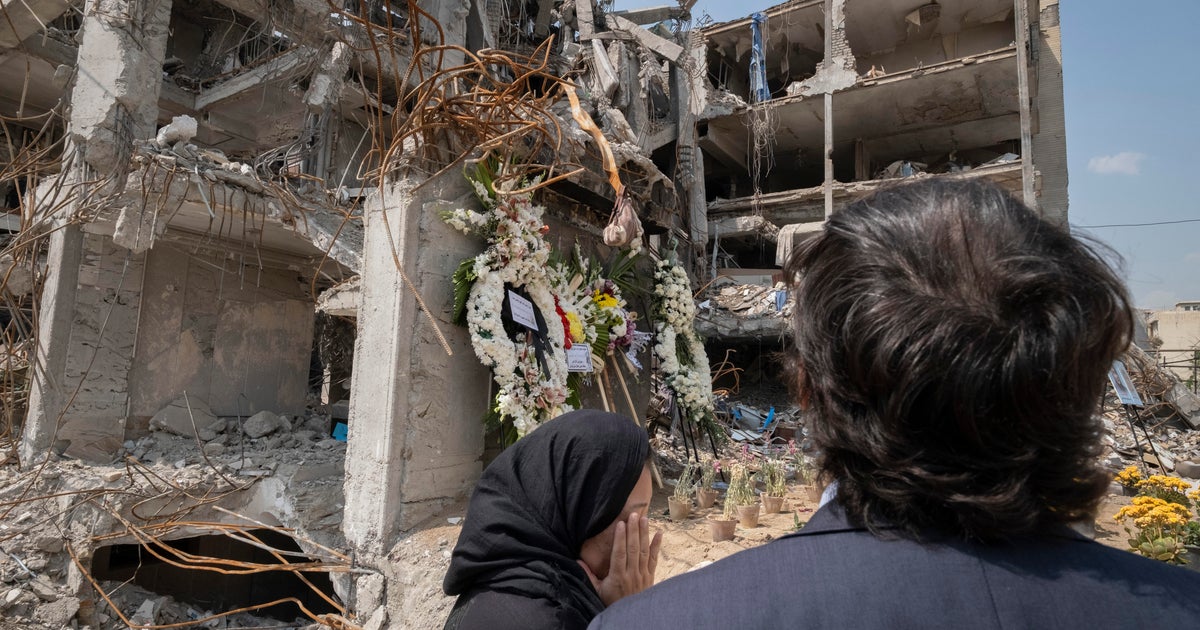
Prediction markets draw scrutiny over Iran bets: "Insider trading in broad daylight," senator says
Wagers on popular prediction markets tied to the fate of Iranian Supreme Leader Ayatollah Ali Khamenei and the timing of U.S. military strikes in the country are drawing scrutiny over possible insider trading and the ethics of betting on death.
Users of Kalshi and Polymarket have flocked to the platforms in recent weeks to wager millions on potential actions involving Iran. For instance, one Polymarket from January drew $4 million in bets on whether the U.S. or Israel would strike Iran first.
Wagers about Iran have translated to windfalls for some users. One trader, under the account name "," made nearly $600,000 on the timing of U.S. and Israeli strikes on Iran, according to data from Polymarket.
The timing of these bets is prompting some lawmakers to question whether the wagers were made based on inside information, with Sen. Chris Murphy, a Democrat from Connecticut, vowing to introduce legislation to curb such practices. At the same time, ethical concerns are growing over allowing users to speculate on certain issues.
President Trump announced that Khamenei was killed in U.S. and Israel-led strikes on Saturday. Iranian officials confirmed his death later that day.
"It's insane this is legal"
Concerns over possible insider trading surfaced after Polymarket users placed bets on the timing of U.S. strikes on Iran. Traders wagered over half a million dollars on the platform's entitled "US strikes Iran by...?".
Scrutiny escalated after Bubblemaps, a blockchain analytics firm, on X that "six suspected insiders made $1.2M betting on a U.S. strike on Iran." Bubblemaps said traders bet "yes" hours before the strike. One user bet $26,000 and won more than $200,000, to the Wall Street Journal.
Sen. Murphy of Connecticut to Bubblemaps's post on X writing, "It's insane this is legal. People around Trump are profiting off war and death. I'm introducing legislation ASAP to ban this."
The senator's office and the White House did not immediately respond to requests for comment.
"Insider trading in broad daylight. This should be illegal no question," Senator Ruben Gallego, a Democrat from Arizona, wrote March 1 on social media.
Gallego didn't immediately respond to a request for comment.
Betting on death?
Some critics said that prediction market bets on the fate of Iran's supreme leader also raised ethical questions. Such contracts are "more or less offering a proxy market on assassination," said Amanda Fischer, the policy director and chief operating officer for Better Markets, a nonpartisan advocacy group focused on financial reform, in a Feb. 28
A Kalshi on the timing of Khamenei's ouster as Iran's leader drew nearly $55 million in trade volume, while contract generated more than $58 million.
Prediction market users place financial bets on the outcome of political, sporting and many other events. That involves purchasing a "contract" ranging in price from $0 to $1 each, reflecting a 0% to 100% chance of what traders think could happen. Users may trade these contracts until the event occurs, with prediction markets matching buyers and sellers on either side of a trade.
Users who bet correctly get paid out. If the trader's bet was wrong, they get nothing and lose whatever amount they wagered.
Kalshi's carveout
Kalshi told CBS News it does not allow customers to place bets on the death of public figures. The company "included every precaution on this market to make sure people could not trade on the outcome of death," a company spokesperson said in an email.
The Kalshi contract about whether Khamenei would be "out" as Iran's leader included a "death carveout," intended to prevent the market from effectively becoming a bet on his death, Kalshi co-founder Tarek Mansour in a March 1 social media post.
That carveout states that if a leader is "out" due to their death, the market will immediately resolve and pay out based on the last traded price before the person's demise, Mansour noted.
Mansour noted that Kalshi highlighted this carveout on the contract's page to alert traders about the exception.
"Death carveouts are important; as a federally regulated prediction market, we are required and feel it is important not to enable direct profiting from war, assassination, terrorism or other violent outcomes," he added.
Kalshi said it also doesn't offer markets on military strikes, as they are illegal under the Commodities Exchange Act. "The only platforms that do offer them are offshore, unregulated platforms outside of the reach of U.S. law enforcement," a spokesperson said in an email.
Polymarket did not respond to a request for comment. The platform's on Khamenei says it's under "final review."
Lawmakers' concerns
Before the war in Iran began, some lawmakers expressed concern that the platforms could incite violence or pose national security risks by hosting certain contracts.
In a to the Commodity Futures Trading Commission, which regulates prediction markets, six senators asked the agency to reiterate that it "will categorically prohibit any contract that resolves upon or closely correlates to an individual's death." The lawmakers gave the agency until March 9 to respond.
"We agree contracts involving death have no place on American exchanges," the Coalition for Prediction Markets, an industry group focused on safe and fair prediction markets, on X in response to a CNBC article about the letter.
The CFTC, which already bans contracts related to terrorism, assassination and war, did not immediately respond to a request for comment.
Kalshi's insider trading bans
Another Polymarket wager sparked similar backlash earlier this year after a trader made a bet on the capture of former Venezuelan President Nicolás Maduro just before President Trump announced his ouster.
At the time, experts said the user, who made $436,000 on the bet, may have had access to classified information regarding the U.S. operation.
Kalshi, meanwhile, last month suspended and fined two users for insider trading, including an employee of the popular YouTuber MrBeast. Bets related to MrBeast's videos were flagged by Kalshi's surveillance team for their "near-perfect trading success on markets with low odds," according to the company's statement.