Trump vows to try banning mail-in voting before 2026 midterm elections — can he do that?

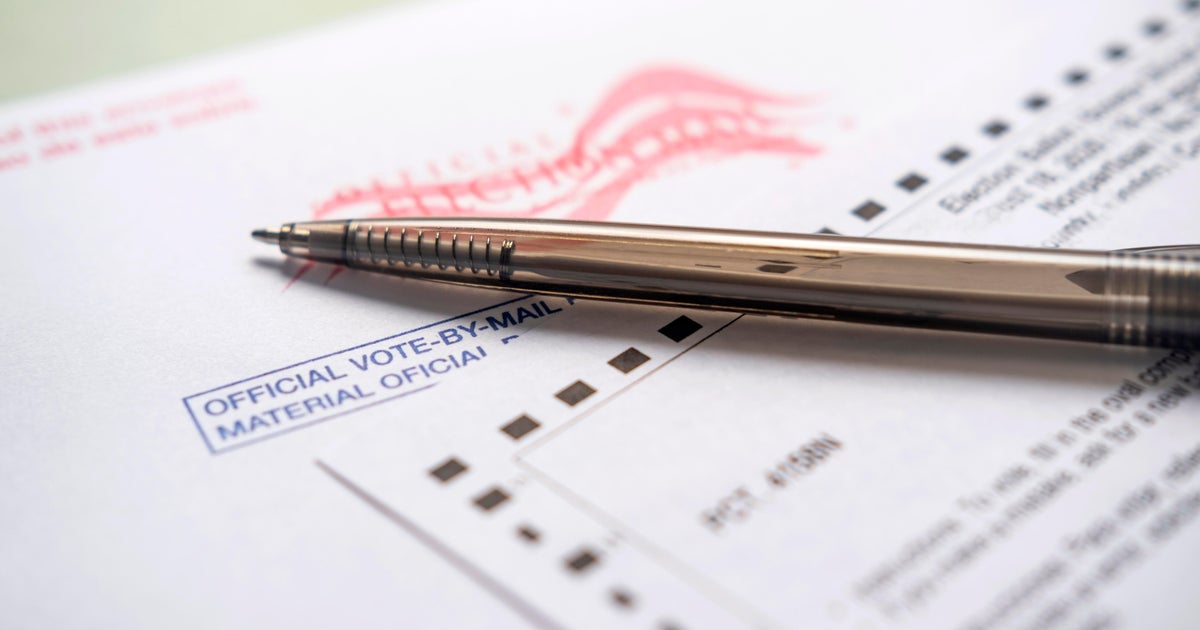
President Trump promised Monday to work to end mail-in voting and said work is already underway on an executive order to ban it before the 2026 midterm elections, although the Constitution does not give him this power.
"We, as a Republican Party, are going to do everything possible that we get rid of mail-in ballots," he said during an Oval Office meeting with Ukrainian President Volodymyr Zelenskyy. "We're going to start with an executive order that's being written right now by the best lawyers in the country to end mail-in ballots."
Why does Trump want to ban mail-in ballots?
"Mail-in ballots are corrupt," the president said. He suggested the method is susceptible to voter fraud, claiming in California, "it's so corrupt, where some people get five, six, seven ballots delivered to them." He has often insisted mail-in ballots can be tampered with or enable people to vote multiple times.
But soon after the 2020 election, Debra Cleaver, founder and CEO of , a nonpartisan voter information site, dismissed the idea of widespread voter fraud as "a myth."
"The outgoing ballots have a barcode, and then when you send your ballot in, you put it in a return envelope and that barcode has to match the barcode that was sent out in order for the ballot to be counted," she explained to CBS News.
After that election, the director of the nation's cyber security agency, Christopher Krebs, called the 2020 vote "the most secure in American history."
In 2024, when Mr. Trump won the presidential election, the nearly a third of ballots nationwide were cast by mail.
The White House told CBS News in a statement that Democrats had "eroded faith in our elections" with policies like "unfettered mail-in voting."
"President Trump wants to secure America's elections and protect the vote, restoring the integrity of our elections by requiring voter ID, ensuring no illegal ballots are cast, and preventing cheating through lax and incompetent voting laws in states like California and New York," White House spokesperson Harrison Fields said Monday night.
Trump's impending executive order to stop mail voting — would it be legal?
In a social media post earlier in the day, the president said of the impending order that it would "help bring HONESTY to the 2026 Midterm Elections."
He claimed that the states "are merely an 'agent' for the Federal Government in counting and tabulating the votes," and that "[t]hey must do what the Federal Government, as represented by the President of the United States, tells them, FOR THE GOOD OF OUR COUNTRY, to do."
But Article I, Section 4 of the says it's the states that have the authority to regulate elections, not the president, and this may be changed only by Congress.
Trump claims U.S. is the only country that uses mail-in voting. Is that true?
Mr. Trump also claimed, "We are now the only Country in the World that uses Mail-In Voting" and argued, "You will never have an honest election if you have mail-in. And it's time that the Republicans get tough and stop it, because the Democrats want it. It's the only way they can get elected."
In fact, more than 30 other countries allow voting by mail for some or all voters, according to the , an intergovernmental advocacy group based in Sweden. , the , , and are among them.
Mail-in voting in the U.S.
In the U.S., mail voting is widespread: offer some form of no-excuse mail-in voting — including 8 states that conduct elections entirely by mail — while the rest require a documented reason such as illness or military service, according to the .
The pandemic gave mail voting a huge boost in the 2020 elections. About 43% of voters cast their ballot by mail that year, according to a by the Election Assistance Commission. In 2024, mail voting dropped off, representing just over 30% of the total votes cast — about 46.8 million votes. The commission said that last year's numbers still exceeded pre-pandemic levels.
The topic of mail-in voting came up during Mr. Trump's meeting with Russian President Vladimir Putin last Friday, too. After the two met Friday, the president told Fox News' Sean Hannity that "Vladimir Putin, smart guy, said, 'You can't have an honest election, election with mail-in voting.' And he said, 'There's not a country in the world that uses it now.'"
Mr. Trump said the two talked about the 2020 election and that Putin told him, "You won that election by so much, and that's (mail voting) how [Biden] got it." Audits and investigations, including some conducted by Trump supporters and Republican secretaries of state, showed no evidence that the 2020 election results were inaccurate.
David Becker, the executive director of the Center for Election Innovation & Research, pointed out in a statement to CBS News that mail-in voting has been around since the Civil War and said getting rid of mail voting "is an incredibly bad idea that would make our elections much less secure and vulnerable to interference."
"Requiring states to eliminate or replace the voting machines that confirmed the election of this president, just 15 months before a midterm election and less than a year before primaries, is not possible and would result in chaos," said Becker, who is also a CBS News election law contributor.
White House spokesperson Harrison Fields told CBS News in a statement Monday night that "President Trump wants to secure America's elections and protect the vote, restoring the integrity of our elections by requiring voter ID, ensuring no illegal ballots are cast, and preventing cheating through lax and incompetent voting laws in states like California and New York."
"Democrats have eroded faith in our elections with reckless laws, such as unfettered mail-in voting, illegally changing laws to benefit their voters, and slow-walking the counting of votes far past Election Day," Fields said.
Sara Cook and Jenna Gibson Riggins contributed to this report.
This story has been updated to correct the total number of states that offer no-excuse mail-in voting.