What is gold's relationship to the U.S. dollar?
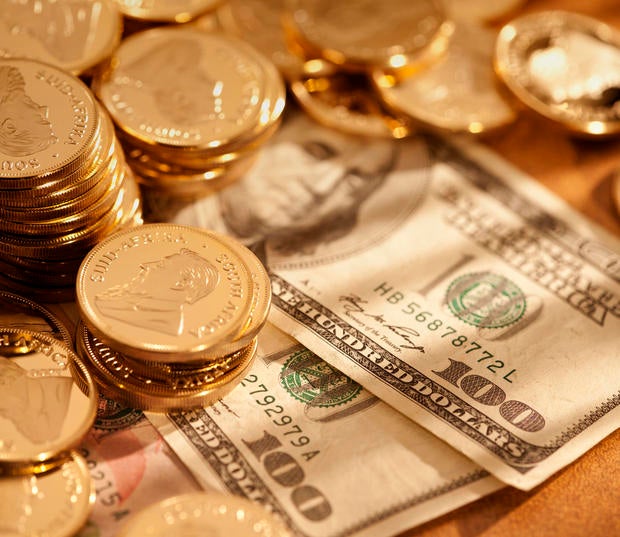
Gold is one of the oldest forms of currency, dating back thousands of years. And while it has always been a staple in investment portfolios, it's become increasingly popular in recent years — due in large part to the economic environment and gold's rapid upward price trajectory. In 2024 alone, the price of gold , reaching an all-time high of $2,790.07 per ounce in October.
"There are several reasons gold has been back in favor," said Steve Braverman, founder of Dignity Gold. "The most obvious is inflation over the last few years, as gold will always be a store of value during inflationary times. Another reason is the continuing conflicts in both the Middle East, Russia and Ukraine."
Various factors affect the price of gold investments, and central to this discussion is how gold's price is affected by its relationship to the U.S. dollar. We spoke to experts to help us understand gold's relationship to the U.S. dollar and how it could change in 2025.
.
What is gold's relationship to the U.S. dollar?
"Gold has no official relationship with the U.S. dollar and hasn't since Nixon," says Braverman. "The real question is, will the U.S. return to the gold standard or some version of it? Fiat has lost 99% of its purchasing power in the last 100 years."
Traditionally, however, gold and the U.S. dollar are considered to have an inverse relationship — meaning that the price of gold tends to be stronger when the dollar is weak and vice versa. This is partly because gold is priced in U.S. dollars on global markets, so changes to the dollar can impact gold's price. When the dollar is strong, gold becomes more expensive for buyers purchasing it in other currencies.
The relationship between gold and the U.S. dollar has also been shaped by the "gold standard," a system that tied the value of the dollar to gold until the 1970s. Plus, gold continues to be seen as a safe-haven asset in times of economic uncertainty, so gold becomes more appealing when the dollar is weak.
However, the dollar is just one of several factors influencing the price of gold. Inflation, interest rates, monetary policies and supply and demand can also play a role in determining the price of gold.
.
How the relationship could change in 2025
Gold's relationship to the U.S. dollar will likely be influenced by several economic factors in the new year. Despite slight upticks over the last few months, the inflation rate has cooled significantly compared to recent highs, but if it rises in the coming year, gold may continue to be in high demand. And if the Federal Reserve continues to lower interest rates, this could weaken the dollar and increase the demand for gold and other precious metals.
"If U.S. fiscal policies lead to greater national debt and inflationary pressures, gold's appeal as an alternative store of value is likely to increase," says Jose Gomez, a partner at Summit Metals. "Central banks may also keep diversifying their reserves away from an exclusive reliance on the dollar, further supporting gold demand."
Economic policies and geopolitical risks also play a role in the relationship between gold and the dollar. For example, ongoing conflicts could drive gold prices higher as investors look for stability.
The bottom line
Gold prices reached an all-time high this year, with many experts saying they could exceed $3,000 per ounce soon. But the price has been fluctuating since early November, and there's always a possibility it could drop further. So should you invest in gold now, or should you wait?
In general, waiting to invest based on price and attempting to time the markets is a bad idea, experts say. "Long-term investors should always keep a diversified portfolio that includes stocks, bonds, and precious metals," Braverman says. "As long as you are buying fundamentally sound companies or products, you should always invest for the long haul and have a plan."
"Timing any market is challenging and waiting for the perfect dip could mean missing long-term opportunities. Gold's role in a portfolio is often less about short-term speculation and more about long-term stability and wealth preservation," Gomez says.
If you're concerned about ongoing economic uncertainty, inflation, or currency risks, adding gold to your portfolio now could help strengthen it. "However, consider averaging your purchases over time so you're not investing all at once," Gomez says. "This strategy helps mitigate the risk of buying at a peak and ensures that you gradually build your position, regardless of short-term price fluctuations."