Dean Lawrence E. Carter Sr. to retire, leaving lasting legacy at Morehouse College

At Morehouse College, a four-decades-long chapter in leadership is ending.
Dean Lawrence Edward Carter Sr., the founding dean of the Martin Luther King Jr. International Chapel, is preparing to retire this summer after more than 40 years of service.
It marks the end of an era deeply rooted in the legacy of Dr. Martin Luther King Jr.
Carter said his journey to Morehouse began with a moment that would shape the rest of his life.
"It was surprising. I was a 10th grader in high school," Carter said.
As a teenager, Carter unexpectedly came face-to-face with King, who encouraged him to reconsider attending Morehouse. He said that the brief interaction left a lasting impression. Years later, Carter followed that path, eventually becoming a scholar, professor of religion, and the founding dean of King Chapel in 1979.
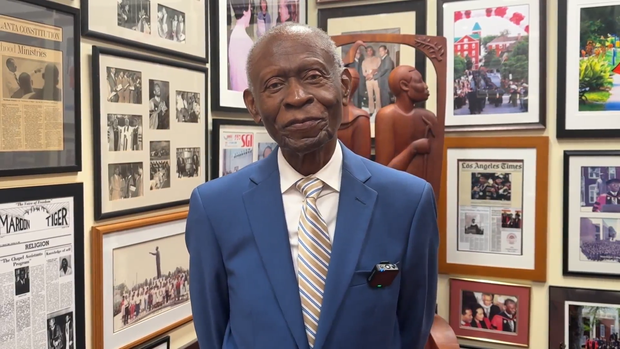
Under his leadership, the chapel became more than a campus landmark. He said it evolved into an internationally recognized center for nonviolence, interfaith dialogue, and moral leadership. Throughout his tenure, he said he focused on teaching students that ethical principles must be lived out in daily life, not simply studied.
His influence extended far beyond the chapel walls. Carter believes his most significant contribution to the broader Atlanta community was bringing the Nile Valley Conference to the city. It's an international gathering that convened global leaders, scholars, and faith figures to promote nonviolence, ethical leadership, and cross-cultural dialogue. The conference reflected Carter's commitment to expanding King's philosophy onto a global stage.
For many at Morehouse, Carter's impact is both personal and profound. Dr. David Wall Rice, a former student who is now a professor at the college, said Carter helped shape his academic journey and his worldview.
"His impact is infinity. What he has sought to instill in this community is that Black men, Black boys emerging into Black men, are of consequence, and they are loved, they are valued, and they are worth investing in," Dr. Rice said.
Rice said Carter's presence helped define the culture of Morehouse itself, especially in shaping generations of Black men.
He described Carter as a figure whose influence reaches far beyond a single role or title.
"His influence can't be overstated," he reiterated.
After decades of teaching, mentoring, and global engagement, Carter said he does not plan to stop his work entirely. Instead, he hopes to continue writing, studying, and engaging with future generations of faith leaders.