91³Ô¹ÏÍø

Watch CBS News

Georgia House passes SB 214 in 132–39 vote, advancing paper ballot overhaul

A sweeping elections bill that would overhaul how Georgians vote appears to have cleared the Georgia House in a 132–39 vote, according to from the Georgia House of Representatives, though official legislative records confirming the vote were not immediately available.
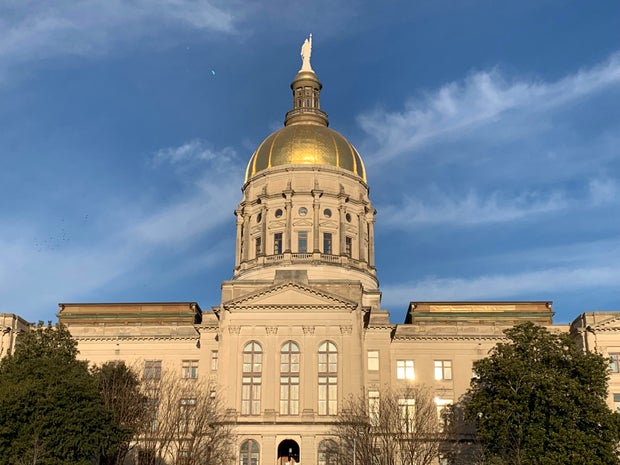
NFL: Super Bowl LIII-City Views
Feb 1, 2019; Atlanta, GA, USA; General overall view of the Georgia State Capitol building. USA TODAY USPW

What the bill would do

At its core, proposes a major shift in Georgia's voting system — moving away from touchscreen ballot-marking devices toward hand-marked paper ballots statewide.

Lawmakers say the bill reflects "over a year of study" into election systems and aims to create a more secure, auditable process. 

Key provisions include:

  • Transition to hand-marked paper ballots scanned by optical systems
  • A "ballot on demand" system printing ballots at polling locations
  • A requirement for a uniform statewide voting system by 2028
  • Expanded audit transparency, including access to ballot images and system logs
  • Changes to automatic recount thresholds, increasing from 0.5% to 1%

The legislation also includes provisions aimed at voter experience, such as allowing certain voters — including seniors over 75 and parents with young children — to move to the front of voting lines. 
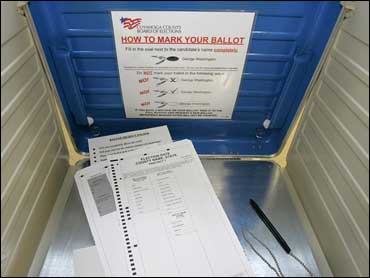
paper ballots is shown at the Cuyahoga County Board of Elections in Cleveland
A sample of the new paper ballots is shown. (AP Photo/Tony Dejak) AP Photo/Tony Dejak

Timeline for implementation

If enacted, the bill would not immediately change Georgia elections.

Instead, it lays out a phased rollout:

  • Some provisions could begin as early as July 2026
  • Broader changes would begin in January 2027
  • A new statewide system must be fully in place before the 2028 presidential primary

Lawmakers say the timeline reflects the complexity of Georgia's election system, which includes roughly 8 million registered voters and more than 2,000 precincts statewide. 
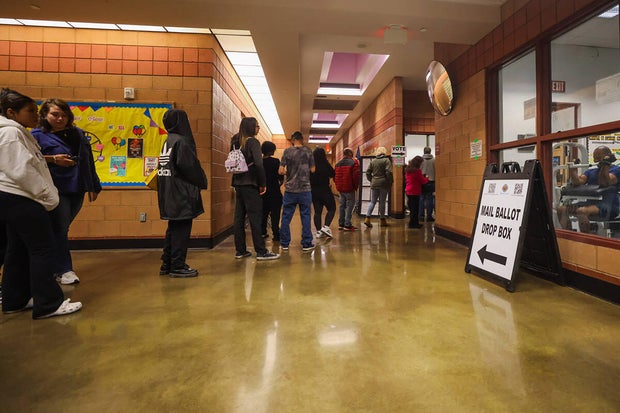
US-NEWS-ELN-NEV-LV
Voters line up to cast their ballots on Election Day on Nov. 5, 2024.  Madeline Carter/Las Vegas Review-Journal/Tribune News Service via Getty Images

Supporters vs. critics

The bill has sparked a familiar divide in Georgia's ongoing debate over election policy.

Supporters argue:

  • Paper ballots provide a clearer, more transparent audit trail
  • The system reduces reliance on electronic voting technology
  • Standardization across counties could improve consistency

Critics counter:

  • The transition could be costly for counties
  • Changes may create confusion for voters
  • Concerns remain about longer lines and access barriers

Voting rights advocates have also raised questions about whether shifting systems ahead of a major election cycle could strain local election offices.
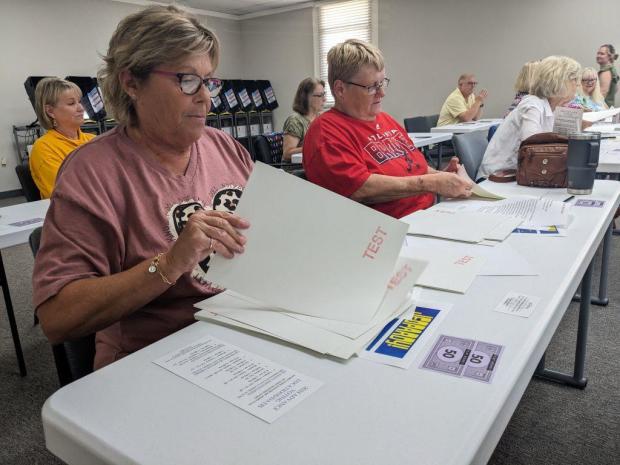
georgia ballot hand counting
Lee County poll workers Debbie Jack (L) and Donna Mathis (R) practice counting ballots as part of new election hand count rules instituted by the Georgia State Election Board, in Leesburg, Georgia, on Oct. 2, 2024.  BECCA MILFELD/AFP via Getty Images

Broader context

The push for SB 214 comes as Georgia continues to be at the center of national debates over election security and voter access following the 2020 and 2024 election cycles.

Georgia currently uses ballot-marking devices that print paper ballots — a hybrid system that has been both defended and criticized.

SB 214 would move the state further toward a fully hand-marked paper model, aligning it with systems used in several other states.

What to watch next

Any differences between House and Senate versions would need to be reconciled before heading to the governor's desk.

Given the complexity and cost of election system changes, the bill is likely to remain a focal point of debate through the remainder of the legislative session. 
View CBS News In
CBS News App Open
Chrome Safari Continue
const link = doc.createElement('link'); link.rel = 'stylesheet'; link.href = '/fly/fly/bundles/cbsnewscontent/css/cmp-banner.min.css?v=296763317a51cab90faa73f1bb146d5c'; doc.head.appendChild(link); doc.body.innerHTML = CONSENT_MESSAGE; } else { el.insertAdjacentHTML('afterend', CONSENT_MESSAGE); } }); } function hidePrivacyMessage() { // Remove from the main document document.querySelectorAll(`.${CONSENT_MESSAGE_CLASS}`).forEach(el => el.remove()); // Remove from inside any iframes document.querySelectorAll('iframe').forEach(iframe => { const doc = iframe.contentDocument || iframe.contentWindow.document; doc.querySelectorAll(`.${CONSENT_MESSAGE_CLASS}`).forEach(el => el.remove()); }); } function activateGatedScripts() { // Handle both new format (cmp-gated-script) and old OneTrust/Ketch format (optanon-category-4) const gatedScripts = Array.from(document.querySelectorAll('script.cmp-gated-script, script.optanon-category-4')); // Activate scripts sequentially with a small delay to avoid timing issues let delay = 0; gatedScripts.forEach(function(placeholder, index) { setTimeout(function() { // Skip if already processed if (placeholder.hasAttribute('data-cmp-processed')) { return; } placeholder.setAttribute('data-cmp-processed', 'true'); const newScript = document.createElement('script'); newScript.type = 'text/javascript'; // Try new format first (data-cmp-src), then fall back to old format (data-src) const src = placeholder.getAttribute('data-cmp-src') || placeholder.getAttribute('data-src'); if (src) { newScript.src = src; } else if (placeholder.textContent) { // Inline script - just copy the content newScript.textContent = placeholder.textContent; } // Handle new format attributes (data-cmp-attrs) - for both inline and external scripts const attrs = placeholder.getAttribute('data-cmp-attrs'); if (attrs) { const tempDiv = document.createElement('div'); tempDiv.innerHTML = '
<\/div>'; const tempAttrs = tempDiv.firstChild.attributes; for (let i = 0; i < tempAttrs.length; i++) { // For external scripts, allow defer/async. For inline scripts, skip them (not valid) if (src || (tempAttrs[i].name !== 'async' && tempAttrs[i].name !== 'defer')) { newScript.setAttribute(tempAttrs[i].name, tempAttrs[i].value); } } } // Copy other attributes from old OneTrust format for (let i = 0; i < placeholder.attributes.length; i++) { const attr = placeholder.attributes[i]; // Skip attributes we've already handled or don't want to copy if (!['class', 'data-src', 'data-type', 'data-cmp-src', 'data-cmp-attrs', 'data-cmp-processed', 'type', 'async', 'defer', 'src'].includes(attr.name)) { newScript.setAttribute(attr.name, attr.value); } } placeholder.parentNode.replaceChild(newScript, placeholder); // If external script, manually trigger window.onload handlers after it loads // This handles widgets that use window.onload for initialization if (src) { newScript.addEventListener('load', function() { // If page already loaded and script set a new onload handler, trigger it if (document.readyState === 'complete' && window.onload) { const originalOnload = window.onload; window.onload = null; // Clear temporarily to prevent loops originalOnload(); // Execute the handler } }); } }, delay); delay += 500; // 500ms delay between each script to allow full loading }); } cbsoptanon.onScriptsReady(function(cmp) { cmp.ot.targetingAllowed(function(allowed) { if (!allowed) { showPrivacyMessage(); } else { activateGatedScripts(); } }); cmp.ot.awaitInitialConsent(function(consent_model) { cmp.ot.addOnConsentChangedHandler(function() { cmp.ot.targetingAllowed(function(allowed) { if (allowed) { hidePrivacyMessage(); activateGatedScripts(); } else { showPrivacyMessage(); } }); }); }); });